
Music Technology Certificate at Dallas College: In-Person Guide
Earn a Music Technology Certificate, 1 year to less than 2 years In-person at Dallas College. Get hands-on studio and live sound training for audio careers.

By Janet Wilson
A music technology certificate from Dallas College can put you behind a studio console, inside a live sound booth, or at the center of a digital audio workstation in less time than many students expect. If you have been searching for a hands-on program that blends creativity with technical skill, this one-year to less-than-two-year in-person certificate at Dallas College deserves a close look. It is built for people who want practical training, not a four-year detour, and it can prepare you for entry-level roles in recording, production, live events, and audio post-production. Whether you are a recent high school graduate, a working adult seeking a career change, or a musician who wants to understand the technology behind the sound, this certificate offers a focused pathway. In this guide, we will break down what the program covers, who it is for, how to apply, what it costs, and how it connects to real jobs in the Dallas-Fort Worth music and media scene.
What Is the Music Technology Certificate at Dallas College?
The Music Technology Certificate is a career-focused credential offered at Dallas College, a multi-campus community college system serving the Dallas-Fort Worth metroplex. The program is designed to be completed in one year to less than two years of full-time study, depending on your course load and scheduling. Because it is an in-person program, students learn in actual studios, labs, and performance spaces rather than solely through online modules. That hands-on component matters in audio education, where microphone placement, signal flow, console operation, and critical listening are skills best developed with real equipment and real-time feedback from instructors.
Unlike a traditional associate degree, which typically requires general education courses alongside major coursework, a certificate zeroes in on the technical and creative competencies employers expect from entry-level audio professionals. You will still develop transferable skills such as project management, collaboration, and problem-solving, but the bulk of your time goes toward studio production, live sound, digital audio workstations, and music business fundamentals. For students who already hold a degree in another field or who want to enter the workforce quickly, this focused structure is a major advantage.
Dallas College operates multiple campuses across the region, and the music technology coursework is typically housed in facilities equipped with recording studios, control rooms, MIDI labs, and live sound gear. The in-person format also means you build a network of classmates, instructors, and local industry contacts, which can be just as valuable as the technical training itself. In a metro area as musically active as Dallas, those connections often lead to internships, gigs, and first jobs.
Who Should Consider This In-Person Certificate?
This program attracts a wide range of students, and that diversity is part of what makes the learning environment rich. Some students arrive straight from high school with a passion for beat-making or band performance. Others are mid-career adults who want to move into audio engineering, podcast production, or live event support. Still others are musicians, worship leaders, or content creators who want to produce their own material at a professional level. The common thread is a desire for structured, hands-on training that leads to tangible skills and, ideally, employment.
If you thrive in a classroom or lab setting and want regular access to industry-standard equipment, an in-person certificate is likely a better fit than a fully online alternative. Audio work is collaborative and often time-sensitive, and learning to communicate with artists, producers, and clients in person is part of the job. The certificate format also suits students who want to stack credentials: you might complete the certificate first, then continue into an associate degree if you decide to pursue more advanced roles or transfer to a four-year institution.
Prospective students should also consider their goals around accreditation and transferability. Dallas College is accredited by the Southern Association of Colleges and Schools Commission on Colleges, which means credits and credentials carry recognized weight. If you are comparing programs, it helps to use a resource that explains how to evaluate accredited colleges and universities so you do not waste time or money on credentials that will not serve you. For students in other states exploring similar pathways, guides such as this overview of top Montana colleges for four-year degree programs can illustrate how regional options compare, even if your focus is a certificate rather than a bachelor's degree.
What You Will Learn: Core Skills and Coursework
The curriculum for a music technology certificate typically blends theory with heavy doses of practice. You can expect to spend time in recording sessions, mixing projects, and live sound scenarios, with instructors guiding you through both the technical and creative decisions. While specific course titles vary by campus and catalog year, the core competency areas tend to be consistent across reputable programs. Below are the skill domains you are most likely to encounter.
- Digital Audio Workstations (DAWs): Recording, editing, comping, and mixing in platforms such as Pro Tools, Logic Pro, Ableton Live, or similar industry tools.
- Studio Recording Techniques: Microphone selection and placement, signal flow, gain staging, tracking sessions, and overdubbing.
- Mixing and Mastering Fundamentals: EQ, compression, reverb, automation, stereo imaging, and preparing a final master for distribution.
- Live Sound Production: Front-of-house mixing, monitor mixing, stage patching, feedback control, and working with bands in real time.
- Music Business and Copyright Basics: Understanding royalties, licensing, contracts, and how to protect your work and get paid.
Beyond these core areas, many programs include coursework in MIDI sequencing, electronic music production, audio for video, and sound design. Some students gravitate toward music production, while others discover a passion for post-production for film, television, or games. The certificate structure usually allows some flexibility through electives, so you can tailor your experience toward the niche that interests you most.
Assessment in these courses is often project-based. You might record a full song, mix a multi-track session, run a live sound rehearsal, or produce a short audio piece for a visual medium. This portfolio approach is valuable because it gives you tangible work samples to show potential employers or clients. Unlike a written exam, a polished mix or a well-run live session demonstrates your competence directly.
Admission Requirements and How to Apply
Admission to a community college certificate program is generally straightforward, and Dallas College is no exception. You will need to complete an application, provide proof of high school graduation or equivalent, and take any required placement assessments. Because the program is in-person and may have limited lab seats, it is wise to apply early and speak with an advisor about course sequencing. Some courses may have prerequisites, such as a basic music fundamentals or audio fundamentals class, so planning your first semester carefully can save you time later.
Here is a simplified sequence that many prospective students follow:
- Submit your application to Dallas College and set up your student account.
- Provide transcripts or documentation of high school completion or equivalent.
- Complete placement testing or meet with an advisor to determine your starting point.
- Meet with a music technology faculty member or program advisor to map your course plan.
- Register for classes and confirm your campus location and lab access requirements.
Financial aid is available for eligible students, including federal grants, work-study, and scholarships. Certificate programs can qualify for aid, but you should confirm the specifics with the financial aid office. Many students also work part-time while completing the certificate, since classes may be offered during days, evenings, or a mix of both. The key is to communicate your schedule constraints to your advisor so you can build a realistic plan.
If you are exploring a broader range of academic options, it can help to compare how different credentials fit your long-term goals. A resource like CollegeDegrees.School offers guidance on degree types, career planning, and higher education pathways, which can be useful when deciding whether a certificate, an associate degree, or a bachelor's degree is the right next step for you.
Cost, Financial Aid, and Return on Investment
One of the strongest arguments for a community college certificate is cost. Dallas College tuition is significantly lower than that of most private audio schools or four-year universities, and because the program is short, you can enter the workforce with far less debt. That said, you should still budget for additional expenses such as textbooks, external hard drives, headphones, and possibly a personal audio interface if you want to practice outside of lab hours. Some programs provide access to equipment, but having your own basic setup can accelerate your learning.
Financial aid options may include:
- Federal Pell Grants for eligible undergraduate students.
- Texas state grants and work-study programs.
- Institutional scholarships offered through Dallas College or community organizations.
- Payment plans that spread tuition across the semester.
To estimate your return on investment, research entry-level salaries for audio technicians, recording engineers, live sound technicians, and podcast producers in the Dallas-Fort Worth market. Pay varies widely based on specialization, experience, and whether you work freelance or staff. Many graduates start with freelance or part-time roles and build a client base over time. The certificate gives you the skills to start earning sooner, and you can continue to upgrade your equipment and expertise as your income grows.
It is also worth noting that some employers offer tuition assistance or reimbursement, especially in larger media, entertainment, or technology companies. If you are currently employed, ask your human resources department whether they support continuing education in audio or media production. Even partial reimbursement can make the certificate more affordable.
Career Outcomes and Job Opportunities
Graduates of music technology certificate programs pursue a variety of roles across the audio industry. The Dallas-Fort Worth area has a robust ecosystem of recording studios, live music venues, churches, corporate event production companies, podcast networks, and media outlets. That means there are multiple entry points, and your specific interests will shape which path you take. Some students aim for studio work, while others prefer the energy of live sound or the steady demand of audio for video and streaming content.
Common job titles for certificate holders include:
- Recording assistant or studio engineer
- Live sound technician or A1/A2
- Podcast editor or producer
- Audio post-production assistant
- Electronic music producer or beat maker
Freelance work is common in this field, especially early in your career. That means you will need to develop basic business skills, such as invoicing, client communication, and time management. Many certificate programs include at least an introduction to music business, but you should also seek mentorship and real-world experience wherever possible. Internships, volunteer opportunities at local venues, and collaboration with student filmmakers or game developers can all build your resume.
Over time, some professionals move into specialized roles such as mixing engineer, mastering engineer, sound designer, or studio owner. Others transition into related fields like broadcast audio, theater sound, or audiovisual integration. The certificate is a starting point, not a ceiling. With experience and a strong portfolio, you can grow into more senior and more lucrative positions.
Why Choose In-Person Learning at Dallas College?
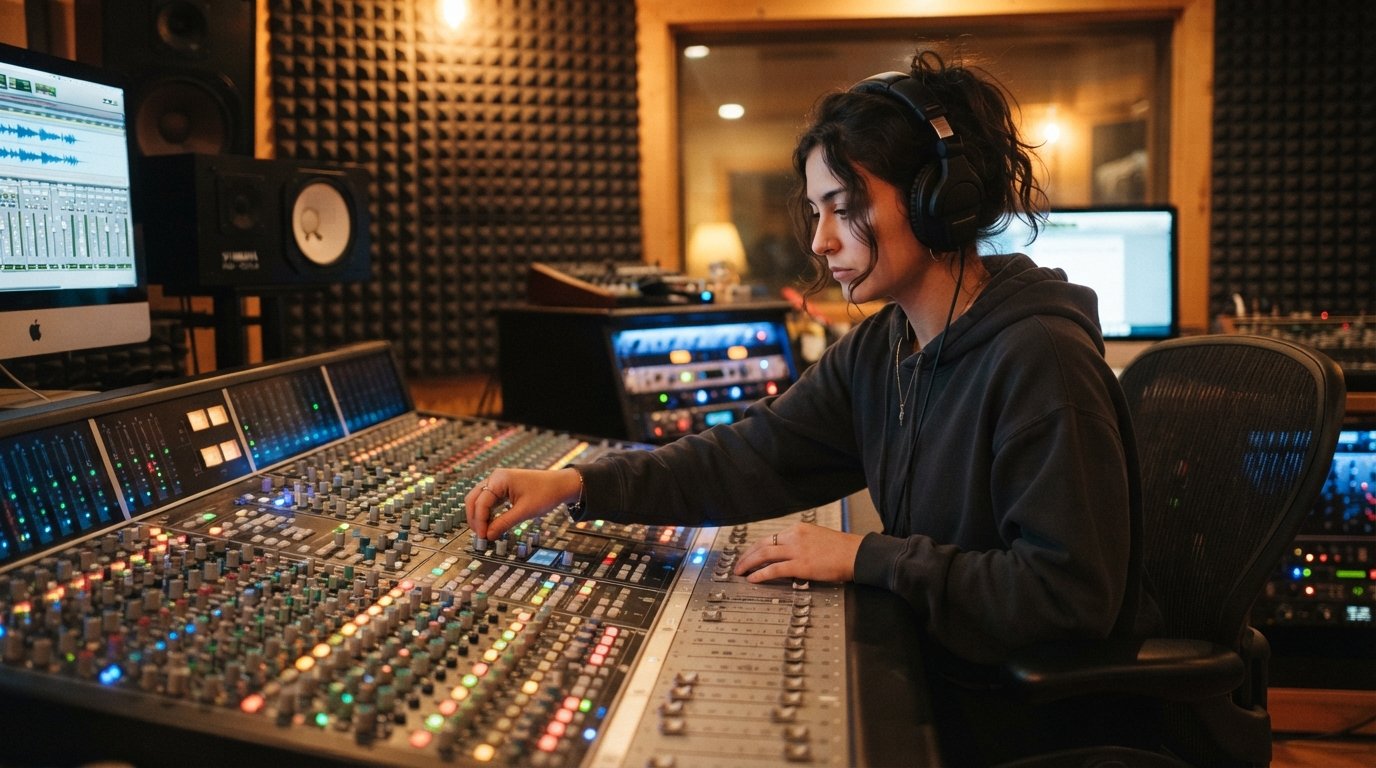
The in-person format is a deliberate choice that aligns with how audio skills are best learned. When you are in a room with an instructor and classmates, you can hear the difference between microphone placements in real time, troubleshoot signal flow issues together, and receive immediate feedback on your mixes. You also get access to equipment that would be expensive to purchase on your own, including large-format consoles, outboard gear, acoustically treated rooms, and live sound rigs. That access is difficult to replicate in a fully online environment.
Dallas College also benefits from its location. The Dallas-Fort Worth area is a major hub for music, media, and entertainment, which means guest speakers, internships, and networking events are often within reach. Faculty members frequently maintain active careers in the industry, so they bring current knowledge and contacts into the classroom. For students who are willing to put in the time and show up consistently, the in-person experience can be transformative.
Finally, the certificate is stackable. If you later decide to pursue an associate degree or transfer to a four-year program, many of your credits may apply toward that goal. That flexibility makes the certificate a low-risk way to test your interest and build momentum without committing to a longer, more expensive degree right away.
If you are ready to take the next step, start by visiting the Dallas College website, contacting the music technology department, and scheduling a conversation with an advisor. Ask about lab hours, equipment access, internship requirements, and transfer options. The more specific your questions, the better you can determine whether this one-year to less-than-two-year in-person certificate is the right fit for your goals. With the right preparation and a willingness to learn, you can turn your passion for sound into a practical, marketable skill set.